

How To Ferment Corn For Pigs
I've tried several dissimilar types of corn for our pigs with interesting results. We're always trying to find a meliorate option.
The best corn for pigs is either finely ground or fermented to maximize digestibility. A soaked or fermented corn is considered ameliorate than dry corn, even if ground. College poly peptide, heirloom corn is preferred but more than expensive. Nearly pig feed contains low-protein hybrid corn.
Whole, cracked, or ground corn are all different for pigs. Hybrid vs heirloom corn also poses an of import deviation.
Croaky Corn vs Whole Corn for Pigs
Cracked corn is marginally better than whole corn for pigs. It'south slightly more digestible but can pb to more than wasted feed. Whole corn is more hands eaten off the ground if it's spiled. There's about a two-iii percent difference in digestibility of dry whole corn and dry cracked corn with pigs.
The enquiry and evidence I've seen over the years all say that grinding or otherwise processing corn improves Its digestibility. That ways less can be used. If you are feeding whole corn to pigs, they'll need to eat a scrap more to continue up the aforementioned growth. This does get a picayune complicated here.
Basically, whole corn is about five percent cheaper than croaky corn. Pigs need to eat a few percent more than whole corn than croaky corn. That eliminates virtually of the feed cost savings. Then, between the 2 corn options, both produce a similar feed nib.
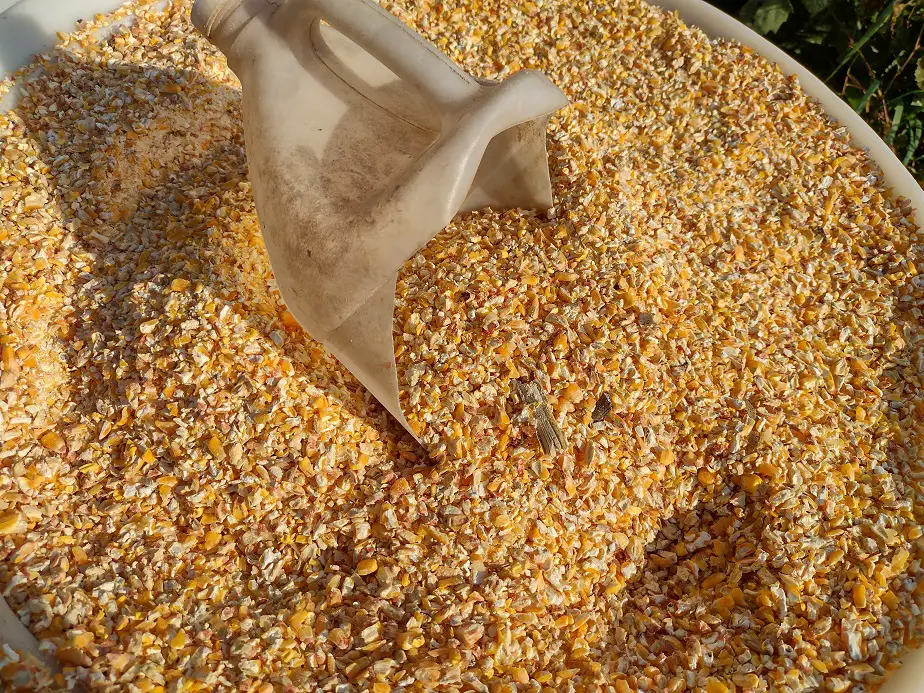
I feed my pigs cracked corn. Information technology'due south not much improve nutritionally, just I get it for the same price from the farmer so it's a no-brainer. And so, whole corn is a petty cheaper but a little more is needed. Cracked corn is needed in slightly smaller amounts, simply is slightly more than expensive.
How about finer ground corn? well, inquiry shows that there's around a 10 per centum difference in digestibility between whole corn and ground corn for pigs. That's enough to consider.
A proper butcher hog ration (850 pounds of feed) will include around 650 pounds of corn. Whole corn would crave ten% more than. Currently, corn in the upper midwest is $0.26/lb. So that's $16.90 more than to feed a pig. Non really a lot, but that's money to use elsewhere and it adds up with multiple pigs.
At present, if you're growing your own corn yous might not have a decent mill or grinder to use. That's a not bad time to just feed whole corn. In fact, y'all can feed corn still on the cob. No need for a shelling motorcar, pigs will swallow the kernels off the ear.
Nosotros grow a few hundred pounds worth of corn to feed the pigs, and don't bother grinding it first. The feed savings (10 percent) is non worth the cost of buying and maintaining a $500 to $1,000 grain grinder. I do ferment the corn, which is a whole unlike thing. More on that in a minute.
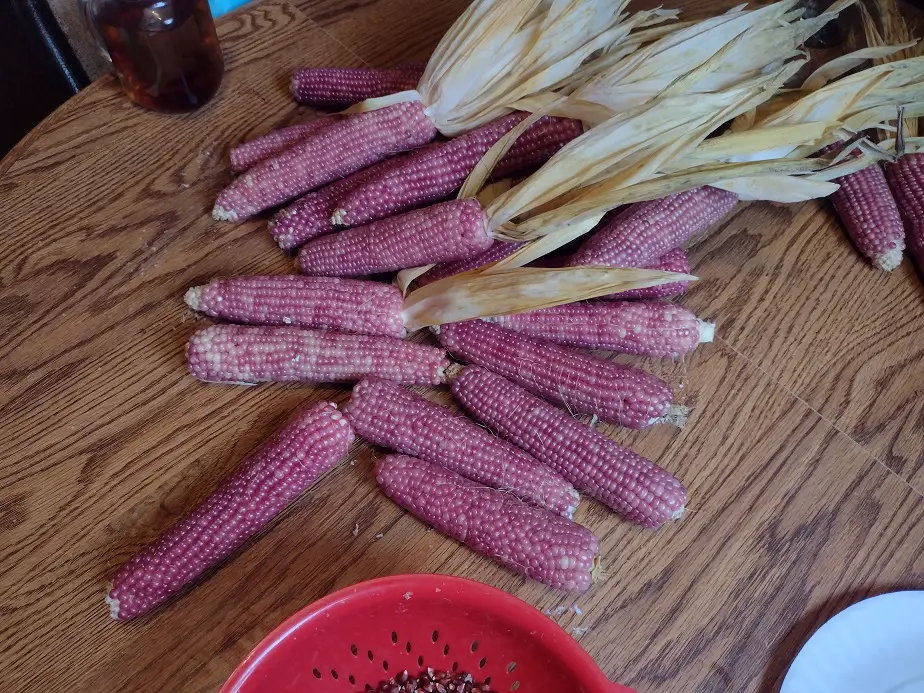
Heirloom vs Hybrid Corn for Pigs
Hybrid feed corn is higher in starch simply lower in vitamins and poly peptide than most heirloom feed corn. Hybrid corn is ofttimes more than of a nutritionally empty corn. Heirloom corn tends to have a higher vitamin content, mainly vitamins A, B, E, and M, equally well every bit other healthful chemicals.
Pigs raised on hybrid dent corn need more vitamins, ordinarily added in the grade of synthesized vitamin pulverization to the feed mix. The archetype yellowish hybrid dent/field corn has a lot of starch, merely not a lot else. We grow flint corns for their higher protein levels and higher nutritional multifariousness.
The Best Heirloom Corn for Pigs
Here's a list of Heirloom corns I would consider growing for pigs.
- Wade'due south Behemothic (multi-colored flint corn)
- Trucker's Favorite (paring corn)
- Blood Butcher (dark-cherry-red dent corn)
- Jimmy Crimson (dark-crimson dent corn)
- Atomic Orangish (deep-orange soft flint corn)
- Ried's Yellow (deep-yellow hard dent corn)
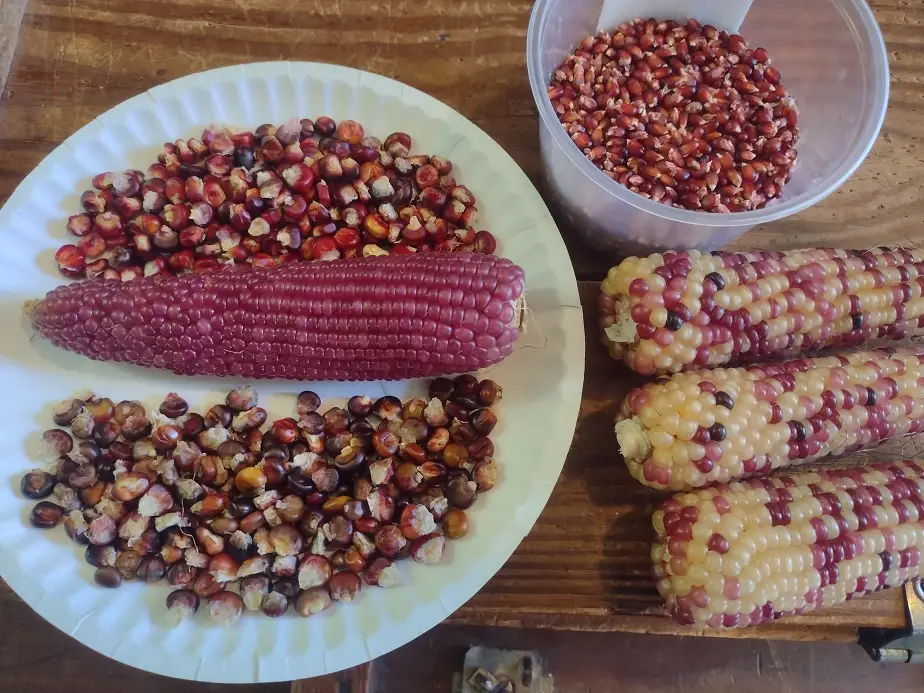
One particular type that I've grown for a few years and recommend strongly is Wade's Behemothic flint corn. It'due south a very nutritionally diverse corn with 65 percentage more poly peptide than the corn I can buy at the feed store. It is a 100 to 120-day corn.
Wade's Giant was developed as an ornamental but has serious feed capabilities. With fertile soil, it outproduces the hybrid corn around hither. I program on growing information technology every year.
I as well grew Early Pink, which grew well for a short season corn. It matured in about eighty days, well before my other corn which gave u.s. an extended harvesting period. Early pink was quite hardy, but not the most productive in this year'due south summer drought. Wade'southward Giant produced a lot more feed.
Corn with darker or bolder colors contains more than phytonutrients. Things similar beta carotene (converts into vitamin A), which is found in orange corns, and anthocyanin (a potent antioxidant), which is found in red and blue corns are good for pig wellness as well as the flavor and quality of pork.
These nutritional compounds are found in the plant pigments and so darker, stronger shades of corn are more than beneficial to animal health and a variety lends to a better diet. My favorite types of corn are multicolored varieties like Wade's Giant. It has some of every color I've ever seen in corn except green.
Next year I'thousand growing two new varieties, Diminutive Orange (the highest poly peptide corn) and Jimmy Crimson (a productive, high-anthocyanin corn). If you lot are going to grow corn for your pigs, I suggest growing two different colors.
I know most people recollect corn is corn, but information technology's merely not so. A diet with more natural pigmentation is a healthier diet. healthy diets proceed animals healthy and happy and make more healthful, delicious meat.
Fermented Corn is Better than Dry Corn
Fermenting corn makes it more digestible, releases locked-up nutrients, adds missing proteins, and increases vitamin content. All types of corn benefit nutritionally from basic liquid fermentation. Basic corn fermentation is just soaking it in water at room temperature for 3 days.
fermented corn is more digestible than finely ground corn, improves pig's gut wellness, and significantly lessens gastric lesions that can cause unexpected expiry in pigs. It doesn't take any fancy equipment, just corn, water, and buckets or barrels with lids.
Related articles:
- Fermented Grains for Grunter Feed (recipes and ratios)
- Raising Pigs Cheap (pork at1/v toll)
- Finishing Pigs on Corn, Smart or Non?
- Heritage Hog Sizes and Butcher Weights
Source: https://northernhomesteading.com/index.php/2022/10/02/best-corn-for-pig-feed-varieties-and-feeding-methods/
0 Response to "How To Ferment Corn For Pigs"
Post a Comment